
Madison County Criminal Court Cases
The Madison County Circuit Court, part of Illinois's Third Judicial Circuit, hears felony, misdemeanor, and criminal traffic matters. Illinois does not split local felonies and misdemeanors between a district clerk and county clerk. The Circuit Clerk maintains both. City officers may issue a citation or make an arrest, but the later criminal case proceeds in the Illinois Circuit Court structure.
The Circuit Clerk is the custodian for case numbers, filed charges, docket entries, hearing dates, orders, judgments, sentences, and financial assessments. The arresting police agency keeps its own report, and the jail keeps booking data. Those sources may describe an earlier charge, while the Madison County court file shows what prosecutors filed and how each count ended.
Madison County Records Gateway
The official Circuit Clerk Records Search gateway is the first local online channel. The county warns that it can load slowly. Have a full name, approximate filing year, or exact case number ready, and avoid treating a delayed page as proof that no file exists.
The official gateway itself shows why the county search should remain the local source of record.
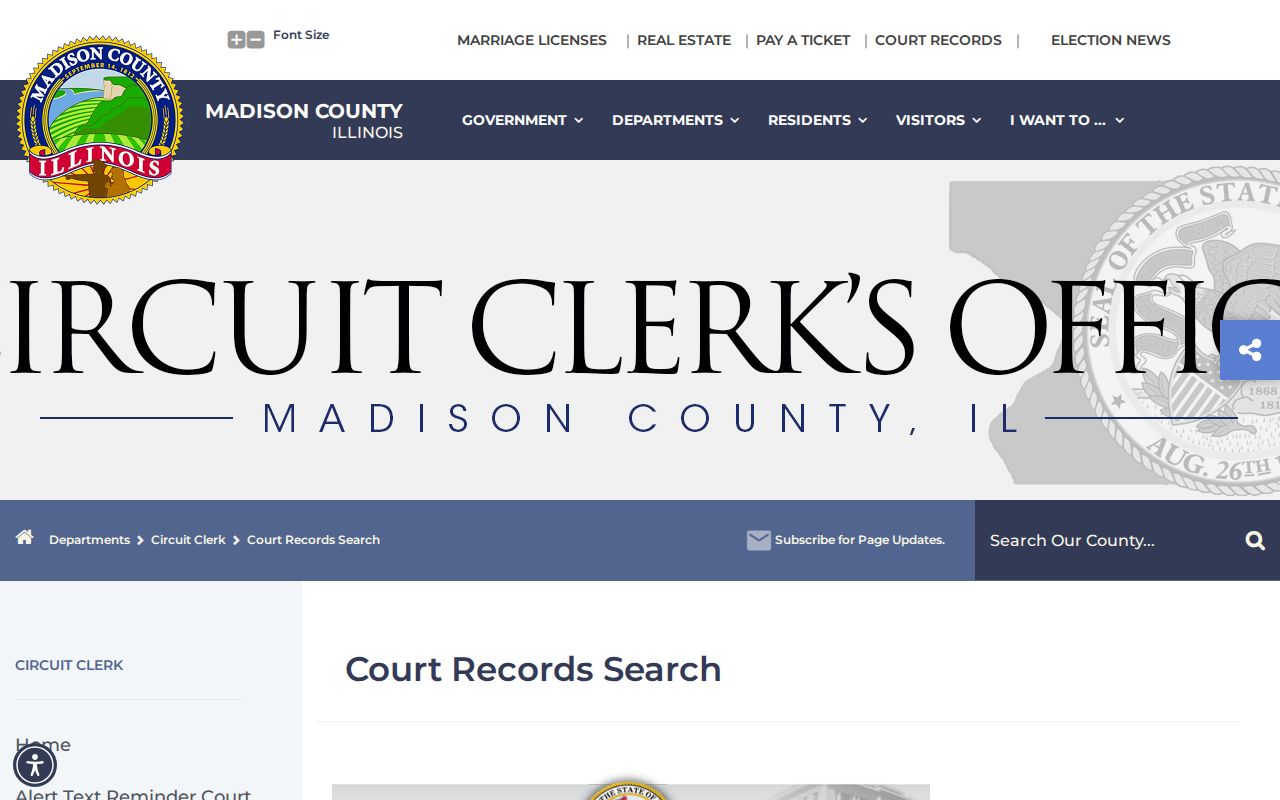
When an image or older entry is absent, save the case number and contact the clerk's copy counter rather than shifting to an unofficial people-search site.
Searching Madison County Case Records
Search results work as an index to the judicial file. They do not guarantee that every pleading or signed order can be downloaded. Follow the docket chronologically and inspect each charge count. A status of “disposed” only says the case is no longer pending; it does not state whether the result was dismissal, supervision, acquittal, plea, or conviction.
- Open the official Madison County records gateway and select the available criminal case option.
- Use the exact case number when known. Otherwise search the party name and narrow by year or case category.
- Confirm identity with the limited descriptors shown. Do not rely on a name match alone.
- Open the docket, read every count, and locate the final judgment and sentence entries.
- Request a plain or certified copy from the Circuit Clerk when the needed document is not imaged online.
| Field Label | Type | Required | Notes |
|---|---|---|---|
| Last name | Text | Search-dependent | Use full spelling and test known aliases separately. |
| First name | Text | Search-dependent | Add it to reduce common-name matches. |
| Case number | Text | No | The most precise route when copied exactly. |
| Birth date | Date | No | Use only where the official interface allows it. |
| Case type or year | Select/filter | No | Narrows results to the likely criminal filing period. |
Madison County Final Orders
A docket description is not the signed document. For a reliable outcome, ask the Circuit Clerk at 155 N. Main Street, Edwardsville, IL 62025, or call 618-692-6240 to confirm current copy procedure. Give the case number, document title, and filing date. Ask whether a plain copy is enough or whether certification is needed for the reader's own official purpose.
Madison County Circuit Clerk
155 N. Main Street
Edwardsville, IL 62025
618-692-6240
Call ahead for current counter hours, copy costs, and archive retrieval.
Note: Court dates can change after an online snapshot, so confirm an upcoming appearance with the clerk or court.
Inside a Madison County Case File
A Madison County case file connects the charging instrument to the final court action. Read by count because one charge may be dismissed while another results in supervision or conviction. Counsel appearances, motions, and hearing entries explain how the case moved, but restricted exhibits and protected personal data may be absent from the public view.
| Case Number & Court | Identifies the Madison County filing and assigned division or judge. |
|---|---|
| Charging Document | Lists filed counts, statutory citations, offense class, and alleged dates. |
| Docket Entries | Chronological record of appearances, motions, orders, and filings. |
| Hearing Dates | Scheduled date, time, and courtroom, subject to later change. |
| Disposition & Judgment | Count-level result such as dismissal, nolle prosequi, acquittal, supervision, or conviction. |
| Sentence & Conditions | Custody, probation, fines, assessments, or other terms ordered by the court. |
Madison County Disposition Terms
Illinois docket language can be brief. The final order controls, but these terms help a reader decide which document to request.
- Nolle prosequi
- The prosecution ended that count without a conviction.
- Supervision
- A court outcome that can avoid a judgment of conviction after successful completion, subject to offense-specific rules.
- Acquittal
- A not-guilty judgment. It does not automatically delete the arrest or docket.
- Vacated
- A judgment was set aside. Read the later order to learn the current result.
A dismissal or acquittal may support an expungement review, but it does not itself erase the Madison County arrest record. The Illinois Courts approved expungement and sealing forms provide the official filing set.
The Illinois Courts forms show the petition and order process used after eligible cases.
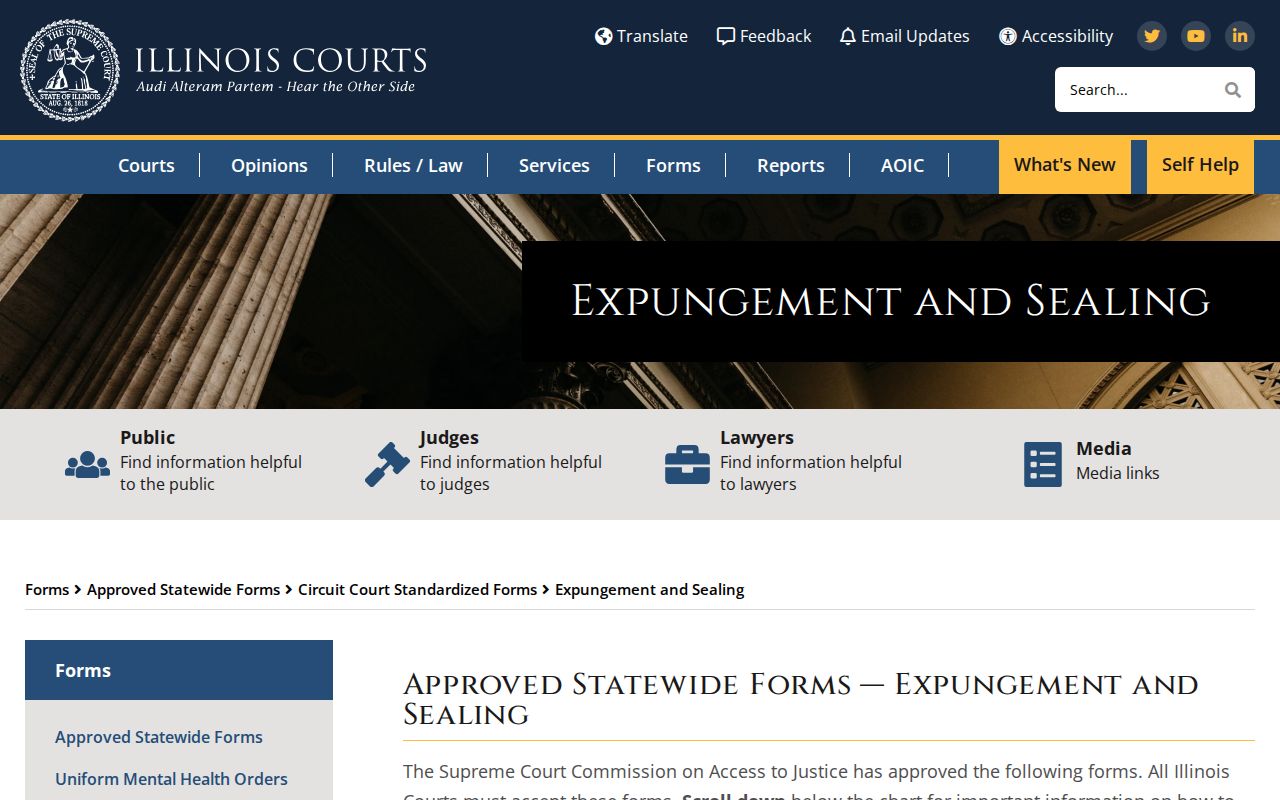
Eligibility turns on every count and prior record, so the final Madison County orders should be gathered before a petition is prepared.
How a Criminal Case Moves
The State's Attorney may file a complaint or information, or seek a grand-jury indictment. Filed charges can differ from booking allegations. Illinois now uses statutory pretrial release and detention hearings rather than the old cash-bail framework, so an older “bond” field should be read in its historical setting.
Case flow: Charges Filed › Arraignment › Pretrial › Plea or Trial › Disposition › Sentencing
The Third Judicial Circuit publishes the local court organization and programs.
That court layer is distinct from the Circuit Clerk's role as keeper of the case record.
Older Madison County Court Files
Madison County was organized before Illinois became a state, while the online index is a modern access tool. The Illinois Regional Archives Depository guide lists historic Circuit Court and chancery holdings. Genealogy or historical research may therefore require an archive request instead of repeated online searches.
Start with the Circuit Clerk when the case number or modern docket is known. Ask whether the file is stored off site. For nineteenth-century or other archival material, use the IRAD inventory to identify the series and date range. Online absence does not establish that Madison County never held the proceeding.
Federal Cases Outside Madison Court
Federal criminal cases arising in Madison County belong to the U.S. District Court for the Southern District of Illinois, not the county Circuit Clerk. PACER searches federal dockets by court, case number, and party, and may charge usage fees. It shows federal judges, attorneys, filings, and docket events.
The PACER interface is the correct federal records layer.
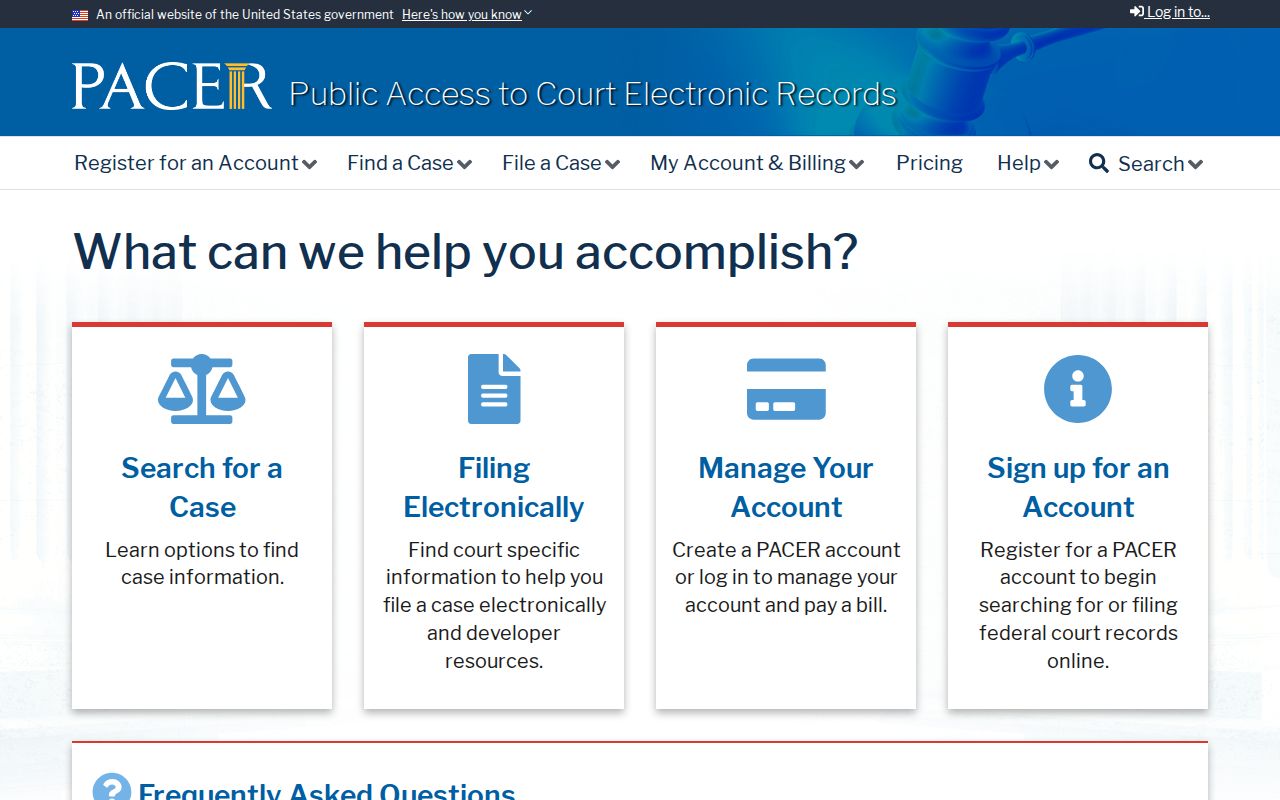
A PACER result should not be mixed with a Madison County case bearing a similar party name.
Case Record Access and Restrictions
Public docket access does not make every document public. Juvenile matters, sealed or expunged records, victim and minor identifiers, birth dates, addresses, and other protected data can be hidden or redacted. An online entry may identify a filing without offering its image. Ask the Circuit Clerk whether a public paper copy exists and what request details are needed.
Illinois FOIA governs executive-branch records, but a judicial case file is obtained through the clerk and court-access rules. Under the Criminal Identification Act, qualifying records may later be expunged or sealed. A clerk cannot give legal advice, yet the office can state whether a public record exists, how to order it, and whether certification is available.
If the public index returns no match, check spelling, aliases, and filing year before calling. Explain whether the matter began with an arrest, summons, or city citation. That detail helps staff distinguish a missing search result from a matter that never became a filed Madison County criminal court case. For a protected file, the clerk can explain the access status without disclosing sealed content.